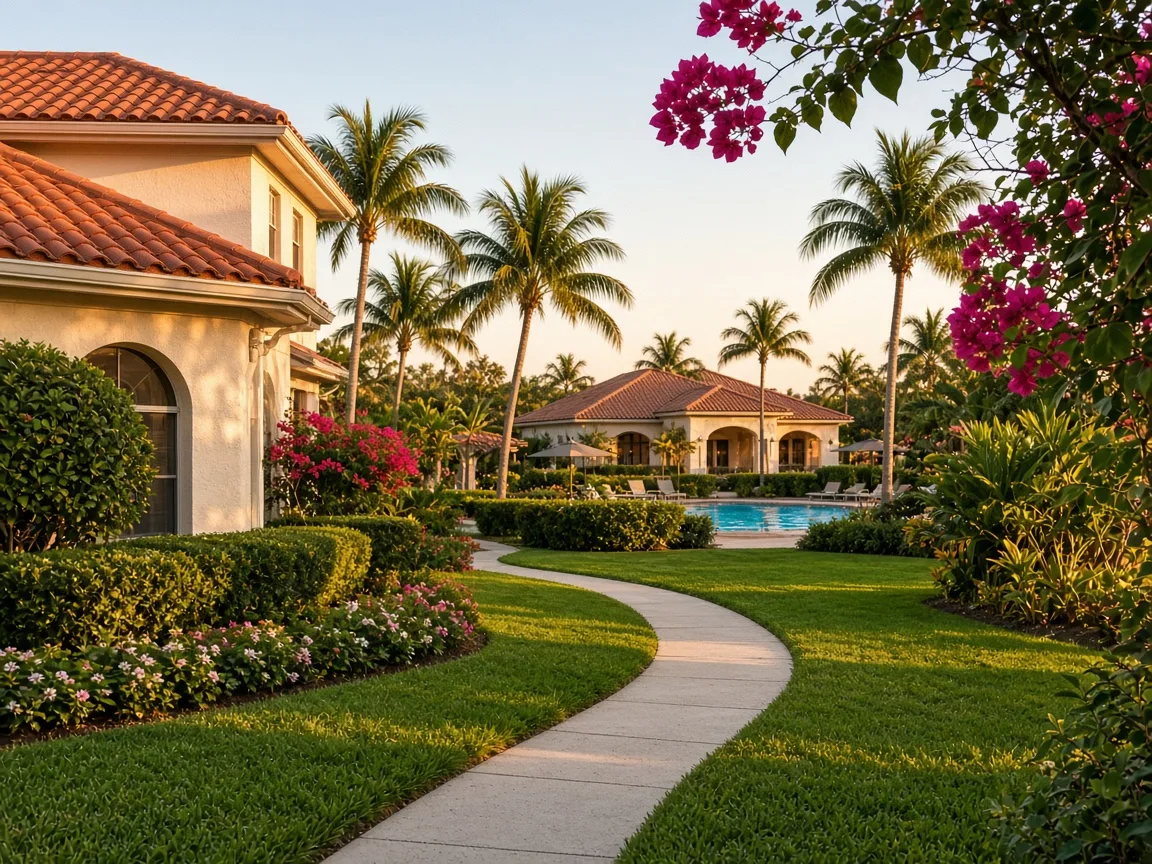
A home in a community with an HOA can be a wonderful fit: manicured common areas, a pool, a clubhouse, and neighbors who take pride in the same streets you do. It can also come with rules and monthly fees that surprise people who did not read past the listing. The secret is not to avoid HOAs; it is to know exactly what you are joining before you sign. Here is what I tell buyers when they fall in love with a community home.
First, what an HOA actually is
In Florida, a homeowners' association is the organization that runs a community of homes, and it is governed by its own state law, the Homeowners' Association Act. In most single-family communities, you own your house and your lot outright, and the association takes care of the shared spaces: the entrance, the common lawns, the pool, the clubhouse. That is different from a condominium, where you own the inside of your unit and the association owns and maintains the building structure itself. Knowing which one you are buying changes what you are responsible for, so it is worth asking the first time you look at any community. If a condo is what caught your eye instead, I wrote about the questions that separate a good condo deal from a costly one here.
What your HOA fee buys
The monthly or annual fee is the price of the shared spaces you enjoy. It typically covers common-area upkeep like landscaping and irrigation, amenities like the pool and fitness center, gate or security systems where they exist, and sometimes trash service and common-area insurance. Some communities keep fees modest; others fund elaborate amenities. Neither is right or wrong, but the fee should match what you will actually use, and it should be a line you plan for the same way you plan for utilities. It is one of the ongoing monthly costs of owning, and I spelled out the full list of those here.
Read the documents before the offer
Before you make an offer, ask for the community's governing documents and read them like a contract, because they are one. The declarations and rules cover things like whether you can rent your home, what pets are allowed, where you can park, and what exterior changes need approval. The bylaws explain how the board works and how meetings and elections happen. And the budget tells you whether the community lives within its means. Your agent can request these documents for you; they are standard, and a healthy community is happy to share them.
The quiet number that matters: reserves
This is the one most buyers never think to ask about. Reserves are the community's savings for big future repairs, like a new roof on the clubhouse or repaving the parking areas. Since the Surfside tragedy, Florida law now requires condominium associations to fully fund their structural reserves and to complete regular structural inspections, so a condo you buy today comes with stronger financial protections than before. Single-family HOAs operate under a different law, so your protection is the community's own planning. Either way, ask to see the reserve balance and the latest budget. A community that plans ahead is a community that will not hit you with surprise special assessments.
The questions worth asking
Here is the short list I run through with buyers: What does the fee include, and how often has it gone up? What are the current reserves, and are there any planned special assessments? What are the rules on pets, parking, rentals, and short-term rentals? What exterior changes require approval? How does the board communicate, and can I see the last few meeting minutes? And what is the vibe you actually want: a quiet neighborhood with a small association, or a full-amenity community with a bigger one? There is no wrong answer, but there is a wrong answer for you, and these questions find it. Choosing the right neighborhood is its own art, and I put together a practical guide to it here.
Communities are like any good relationship: they work best when you know what you are signing up for and you choose it on purpose. If you are looking in Florida and a community home has caught your eye, I will help you read the documents, understand the numbers, and decide whether that HOA is the right fit for your life. I would love to talk whenever you are ready.

Written by
Ruth Rivera
Broker Associate with Coldwell Banker Realty, in real estate since 1992, with offices across Florida. 1000+ homes sold, licensed in Florida (BK3168285). Bilingual, English and Spanish.
Have a question about your specific situation?
Ruth answers personally, in English or Spanish. She's got your back.
Ask Ruth