Relocating to Tampa, Florida · A guide by Ruth Rivera
Living in Tampa.
The honest, sourced guide.
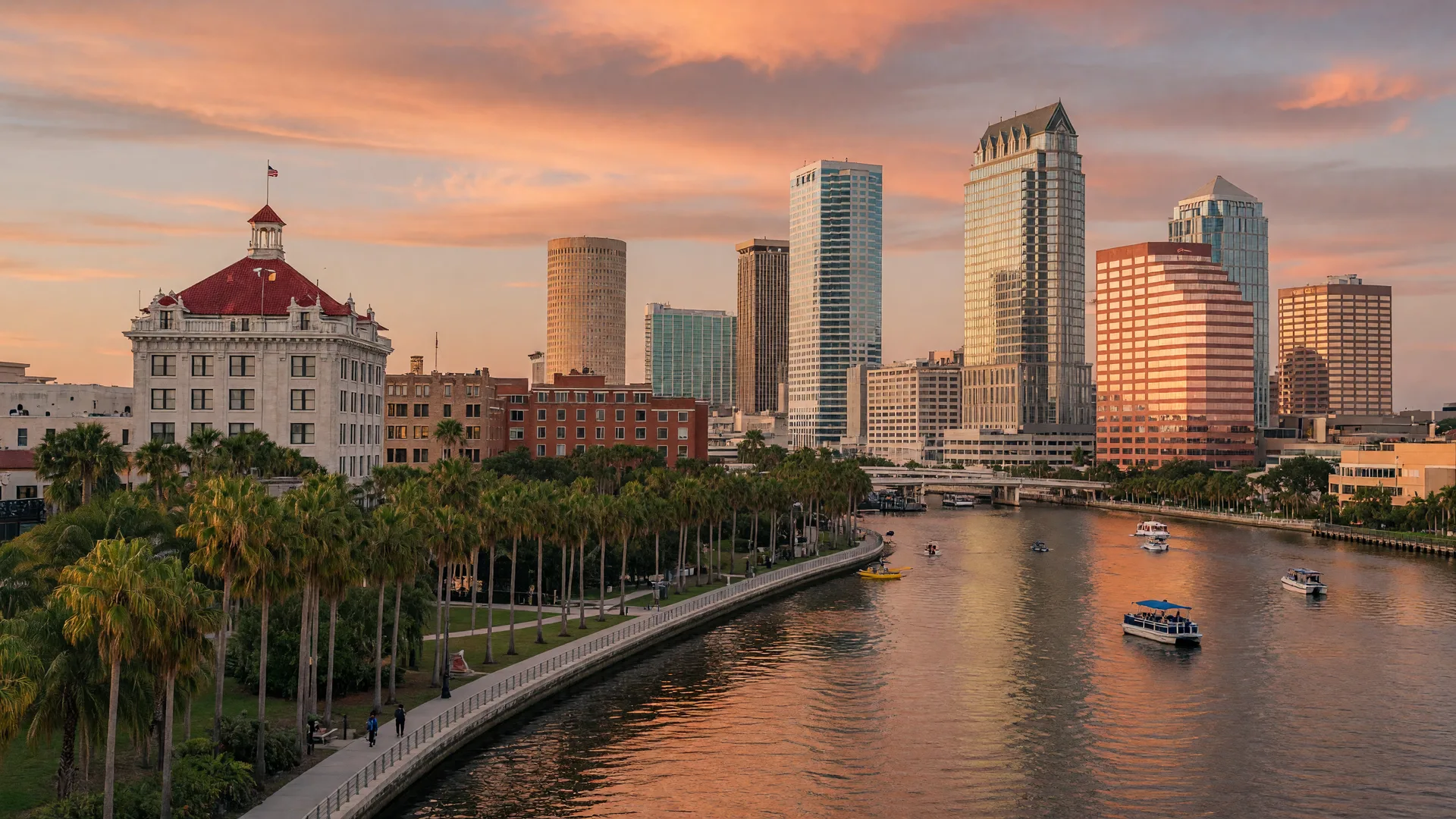
After more than 30 years in Florida real estate, I have watched Tampa become the city
that surprises newcomers most. Here is my honest answer in one line: Tampa is the Gulf
Coast city with a booming waterfront downtown, growing suburbs, and a strong job
market, where the bay is part of everyday life and the city keeps making room for
people ready to build a future.
This guide is built for relocators. I walk you through the current Tampa Bay housing
market with dated, sourced numbers, what to know about schools, the neighborhoods
people actually choose, real commute times on the main corridors, and an honest read
on the cost of living. Nothing here is invented or guesswork: where public sources
disagree, I show the range and say so. And when you are ready to look at homes, I
would love to help you find the right one.
These are the numbers that matter when you compare Tampa to where you live now. Every
figure comes from the named public source, with its date, verified together on October 1,
2026.
Measure
Tampa Bay figure
Source and date
Median home price
$402,000 (county) · $479,000 (city)
Redfin, Hillsborough County, three months ending May 2026; City of Tampa, three
months ending August 2026
Price per square foot
≈ $229 (county)
Redfin, Hillsborough County, May 2026 (+1.3% year over year); metro-wide trackers
using different definitions report higher, e.g. SoFi near $290 with a different
property mix
Median days on market
41 (county) · 46 (city)
Redfin, Hillsborough County, May 2026; City of Tampa, August 2026 (roughly 38 a
year earlier for the city)
Median rent (apartments)
≈ $1,895 (city median)
Zumper, City of Tampa median, September 2026; Yardi Matrix Tampa metro average
asking rent $1,783 (three months through May 2026); Zillow metro average about
$2,195, a different measure
Year-over-year price change
+0.1% (county) · +10.0% (city)
Redfin, Hillsborough County, May 2026; City of Tampa, August 2026 vs. a year
earlier; Greater Tampa REALTORS shows the median essentially flat, 0.0%
Active inventory
≈ 5,900 (county) · ≈ 3,500 (city)
Momentum market tracker, Hillsborough County, mid-2026; Redfin, City of Tampa,
August 2026; Greater Tampa REALTORS reports county inventory down 5.8% year over
year
Source notes: Redfin housing market trackers for Hillsborough County (three months ending
May 2026) and the City of Tampa (three months ending August 2026), via redfin.com; Greater
Tampa REALTORS market statistics, 2026, via tamparealtors.org; Zumper rent research, City of
Tampa median, September 2026; Yardi Matrix Tampa Multifamily Market Report, July 2026
(three-month average asking rent through May 2026); Zillow rental market trends, 2026. No
single official metro-wide figure exists across all sources, so the table pairs the
Hillsborough County figure with the City of Tampa figure where they differ, and shows the
published range rather than an invented number. All figures verified together on October 1,
2026.
What this means for buyers: the county median
has been essentially flat while Tampa's city neighborhoods, especially waterfront and
walkable addresses, have kept climbing. That split is exactly why I start with your
commute and lifestyle, then show you the real numbers for the specific area: the right
zip code makes more difference than the metro average.
Schools
Schools: what buyers need to know.
The school system serving Tampa is big, and that is a feature once you understand it.
Hillsborough County Public Schools (HCPS) reported about 212,000 students for the
2025-26 school year at the fall count date, down from about 222,000 the year before
(district enrollment data), across roughly 250 to 300 school sites depending on the
source (Wikipedia, U.S. News, and Public School Review directory counts). By size it is
one of the largest districts in Florida, and its range of programs, magnets, and school
choice options is part of why.
Buyers who work across the bay sometimes look at Pinellas County Schools, the district
serving St. Petersburg and Clearwater: about 81,000 to 88,000 students depending on the
count and date (district materials and NCES, 2024-25 and 2025-26), across roughly 150
schools. Enrollment in Pinellas has been declining and the district has been planning
consolidations (FOX 13), so the address-by-address verification matters there as much
as anywhere.
My honest rule, which I repeat on every tour: school assignments are address-specific,
and they can change as districts redraw boundaries or schools fill up. Two homes a few
streets apart can feed different schools, and a great school at one address does not
guarantee the same school next door. Florida also gives families school choice options,
so your zoned school is not always your only option.
Verify by address, every time
Before you make an offer, confirm the exact address with the district directly:
Hillsborough County Public Schools at sdhc.k12.fl.us for Tampa area addresses, or
Pinellas County Schools at pcsb.org for addresses across the bay. I keep this page to
district facts on purpose. Rankings and opinions about schools belong in a
conversation about your child and your family, not a guide for everyone, and I am
happy to have that conversation with you.
Neighborhoods
Eight communities people choose.
There is no single best neighborhood in Tampa, because the right fit depends on your
commute, your budget, and the way you want to live. What I can do is describe each area by
its character, who it tends to suit, and what the drive feels like. I describe areas by
lifestyle on purpose: under the Fair Housing Act, every buyer has the right to live in any
of these communities, and I serve everyone with the same care, in English or Spanish.
Hyde Park
Tampa's classic close-in neighborhood: brick streets, bungalows and Mediterranean Revival homes around Hyde Park Village, with the waterfront at the end of the block. The boutiques, cafés, and shaded sidewalks give it a settled, storybook feel that is rare this close to a downtown.
Good for: Professionals and families who want a walkable, historic neighborhood a short drive from downtown.
Downtown is usually about 10 to 15 minutes, the Westshore business district about 10 to 20, and the airport roughly 15 to 25 depending on traffic.
South Tampa
The broad area between the bay and the Interbay peninsula, anchored by the Bayshore Boulevard waterfront promenade and grand oaks. It is a mosaic of smaller communities, A-frame bungalows next to new builds, all with a relaxed, outdoorsy rhythm.
Good for: Families and professionals who want established, leafy streets with quick access to downtown, the base, and the bay.
Downtown runs about 10 to 20 minutes, MacDill often 10 to 15, and the Crosstown's toll express lanes keep east-west trips quick when traffic builds.
Seminole Heights
An older bungalow district north of downtown that has become Tampa's neighborhood for chef-driven restaurants, breweries, and coffee shops along Florida Avenue. Oak-lined streets and affordable older homes give it a young, community-first energy.
Good for: First-time buyers, creatives, and young professionals drawn to character homes, front porches, and a lively food scene.
Downtown is usually about 10 to 15 minutes, the airport about 20 to 30, and the interstate access keeps most of the region within easy reach.
Channelside and Downtown
The riverfront core: high-rise condos and apartments, the Riverwalk, Amalie Arena, the cruise port, and a growing grid of restaurants and nightlife. It is Tampa's most walkable address, with the bay just steps from your door.
Good for: City-lovers, young professionals, and empty nesters who want to walk to work, the arena, and the waterfront.
Living where you work is the point: most of downtown is walkable, the TECO Line streetcar links the riverfront, and Westshore and the airport are usually 10 to 20 minutes by car.
Westshore
The office and airport district between downtown and the bay: corporate towers, International Plaza, and Tampa International Airport. Mid-rise condos and established neighborhoods put you close to the region's largest concentration of jobs.
Good for: Professional workers who want to be minutes from Tampa's biggest business district and the airport.
The shortest commutes in Tampa: most Westshore jobs are 5 to 15 minutes away, downtown about 10 to 20, and the airport often in single digits off-peak.
Carrollwood
A mature, leafy community north of downtown with winding roads, oak canopies, and a family-friendly mix of homes from the 1970s onward plus newer communities. Local parks, recreation, and shopping keep daily life close.
Good for: Families who want established suburbia with parks, lakes, and a fast route into the city.
Downtown is typically about 20 to 30 minutes via the Veterans Expressway or Dale Mabry, and the airport about 20 to 30 depending on the hour.
Brandon
Tampa's big east-side suburb, with an enormous inventory of single-family neighborhoods, shopping, and parks of its own. It is one of the most established and complete suburbs in the metro, with options at nearly every price point.
Good for: Families and buyers who want more home for the money and don't mind a longer daily drive.
Downtown is typically about 25 to 40 minutes at peak via I-4 or the Selmon Expressway, with the Crosstown toll lanes holding the worst of it off.
Wesley Chapel
A fast-growing community on the I-75 corridor north of the county line, anchored by the Wiregrass town center, new schools, and master-planned neighborhoods. It is where much of Tampa's new inventory keeps arriving.
Good for: Families and commuters who want new construction and planned amenities on the region's northern growth corridor.
Downtown runs about 30 to 45 minutes at peak; the I-75/I-275 spine reaches the airport and Westshore in roughly 35 to 50, so weekend trips north are the real payoff.
A note on fit: these are everyday starting
points, not a complete list. Tampa has dozens more communities worth a look, from Davis
Islands and New Tampa to Riverview and Lutz, and the right one for you may be a quieter
street I only find by listening to what you actually need.
Commute & connectivity
Getting around: the honest picture.
The official average one-way commute is about 26 minutes in the city of Tampa (U.S.
Census, American Community Survey). Your real number depends on which corridor you live
near and which one you drive, so here is the practical map.
Downtown Tampa
The riverfront office and government core: county and federal offices, law and finance towers, Amalie Arena, the cruise port, and the University of South Florida's growing downtown presence. Homes in Hyde Park, South Tampa, Seminole Heights, and Channelside keep this drive short, and much of the core is walkable.
The Westshore business district
Tampa's largest employment center: 6,500-plus businesses and roughly 105,000 employees (Westshore Alliance), including corporate headquarters, International Plaza, and Tampa International Airport. Workers who live in Westshore, South Tampa, or Carrollwood get the shortest, most predictable commutes in the region.
MacDill Air Force Base
Hillsborough County's largest single employer: more than 15,000 military and civilian personnel, hosting USCENTCOM and USSOCOM, with an economic impact of about $3.9 billion a year (Tampa Bay Defense Alliance, FY2023 statement). South Tampa is the natural base for the commute, and veterans, active-duty, and DoD civilians tell me it is one of the most family-loyal communities in Florida.
Tampa International Airport
TPA anchors the Westshore district and is one of the region's biggest aviation employers, with nonstop service across the U.S. and beyond. From most central neighborhoods the airport is 15 to 25 minutes off-peak, and the Veterans and Crosstown toll roads make the run predictable.
I-275
The metro's main north-south spine through downtown, Westshore, and across the bay to Pinellas. It carries the heaviest commuter traffic, so peak-hour stretches can run well past off-peak times, and the I-275 Express toll lanes buy back minutes when you need them.
I-4
The east-west interstate linking Tampa, Plant City, Lakeland, and Orlando. It is Brandon's main artery into downtown, with the Selmon Expressway (the Crosstown) as the toll alternative across the middle of the city.
SR 589 (Veterans Expressway)
A toll expressway running northwest from the airport and Westshore area through Carrollwood and toward Citrus County. For northwest Hillsborough commuters it is the fastest, most predictable route to the airport and the Westshore jobs corridor.
SR 618 (Selmon Expressway, the Crosstown)
The toll expressway across the middle of Tampa, from the Gandy and South Tampa side through downtown and east to Brandon and I-75. Its reversible express lanes make it the region's best east-west relief valve when I-4 backs up.
I-75
The metro's northeast-southwest interstate, serving Wesley Chapel, Brandon, Riverview, and the Suncoast beyond. It is the main corridor for the region's newest suburbs and connects to I-4, the Veterans Expressway, and the Crosstown.
Ruth’s rule of thumb: the toll roads
use SunPass, E-PASS, or toll-by-plate, with express lanes priced dynamically, so a
transponder keeps tolls simple. Plan on adding 10 to 25 minutes to any off-peak estimate
on I-275 or I-4 in rush hour, and expect the Veterans Expressway and the Selmon Crosstown
to trade a small fee for a far more predictable schedule. Choosing a home near the
corridor you use is the single biggest commute decision you will make here, and we make
it together.
Cost of living
What life actually costs: an honest portrait.
The most-cited indexes put Tampa close to the national average, from about 3% below
(PayScale and RentCafe, 2026) to roughly 4% above (BestPlaces), and even the sources
that come in higher still find housing below Florida's coastal metros. Here is the
portrait without fake precision, in the general terms and ranges that are actually
true.
Housing
The biggest line item, and the reason many relocators come out ahead: the sourced median price and rent figures are in the snapshot above, and Tampa housing has historically cost less than South Florida's coastal metros while the city keeps adding jobs and waterfront living.
Taxes
Florida has no state personal income tax, a real difference on your take-home pay. Property taxes in Hillsborough County vary by city and millage, and Florida's homestead exemption can lower the bill on a primary residence. I always pull the real tax estimate for the exact address before you make an offer.
Insurance
The state's biggest variable. Florida's average home insurance premiums are among the highest in the nation (Bankrate, 2025; Insurify, 2026), and Tampa Bay premiums reflect hurricane and flood exposure. Every property quotes differently, so we get real insurance quotes and a flood-zone check before you commit.
Utilities and groceries
Air conditioning is the workhorse of a Tampa summer, so utility bills run above the national average, and groceries edge slightly above as well (RentCafe and PayScale, 2026; utilities about 7% higher and groceries about 6% higher, with housing roughly 10% lower). The trade is a mild winter with almost no heating season.
The everyday Tampa
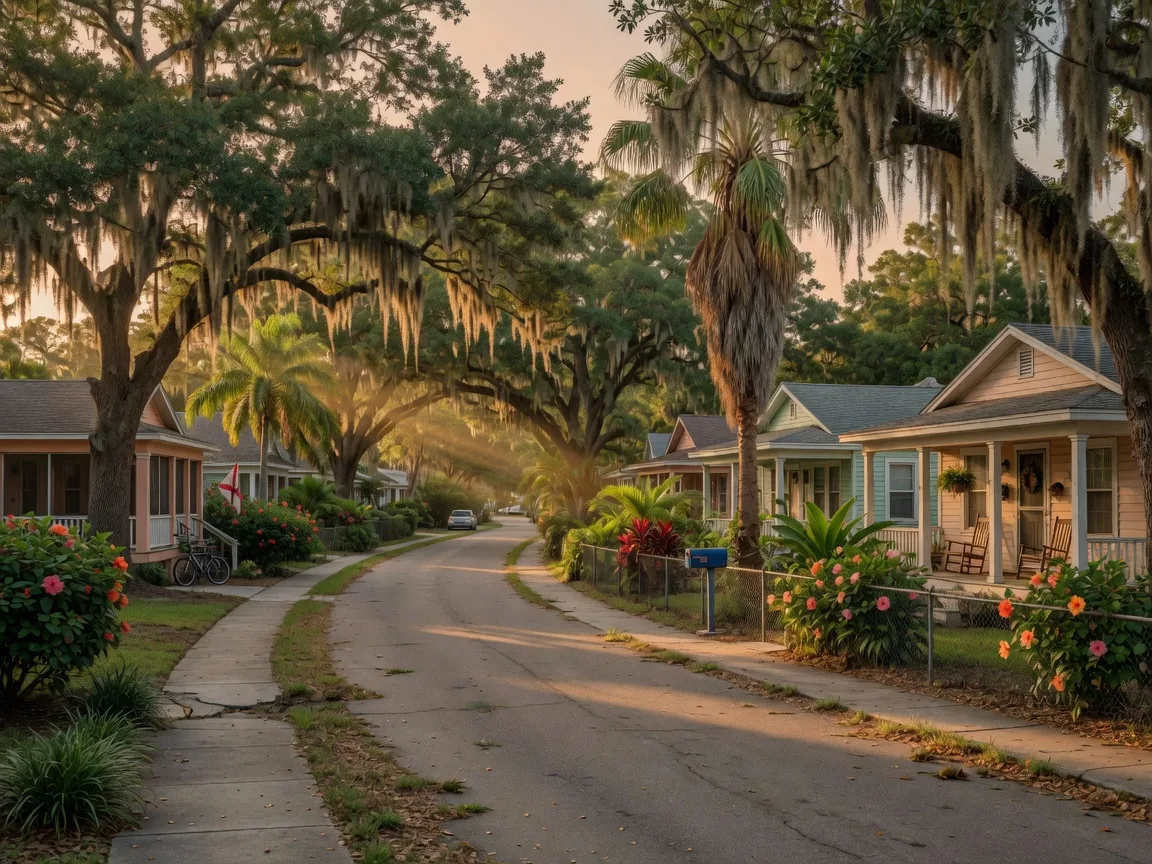
Oaks, porches, warm light
“The point of this section is not a fake-precise number, because your household
is different from the next. When we talk about your budget, I walk you through the
real line items for the actual homes and ZIP codes you are considering.”
Ruth Rivera · Your Fearless Real Estate Resource
Pros and cons
The honest pros, and the practical cons.
No place is right for everyone at every moment, and Tampa is no exception. Here are the
real strengths, and the things that ask a little planning, framed the practical way I
frame them for my own clients.
What Tampa does well
A booming waterfront downtown
The Riverwalk, the arena, the cruise port, and a skyline that keeps adding towers: Tampa's core has transformed into one of Florida's most livable city centers, with the bay at the end of the street.
A strong, diverse job market
The Westshore district's 105,000 jobs, MacDill's command centers, Tampa International Airport, healthcare, finance, and trade give the metro real engines, and the region keeps adding companies and newcomers.
Friendly math
No state income tax, housing below the coastal metros, and an overall cost of living that the most-cited indexes put right around the national average, from about 3% below to 4% above depending on the source.
Bay life and beach weekends
Tampa sits on Tampa Bay with beaches across the water in Pinellas, and Bayshore Boulevard's waterfront promenade, often described as one of the longest continuous sidewalks in the world, runs about 4.5 miles along Hillsborough Bay. The water is part of the everyday, not just the vacation.
Weather worth planning around
Roughly 246 sunny days a year (BestPlaces), warm winters, and summer heat balanced by afternoon sea breezes and thunderstorms that keep everything green. Most of the year, Tampa has some of the best weather in the country.
What to plan for
Summer heat and humidity
Real, and manageable: efficient air conditioning, insulated windows, and tours planned for cooler mornings make it easy, and we check a home's AC age and efficiency on every visit.
Peak-hour traffic on the main corridors
I-275 and I-4 are busiest at rush hour, and the fix is strategic: express toll lanes, the Veterans and Crosstown alternatives, and choosing a home near your job corridor so the daily drive stays short. That is exactly the plan I build with every client.
Insurance and flood risk vary by address
Tampa Bay premiums are among Florida's highest and flood zones change street by street. We get real quotes and a flood-zone check before you make an offer, so the numbers never surprise you at closing.
A car still matters outside the walkable core
Downtown, Channelside, and parts of Hyde Park are walkable with the TECO Line streetcar added in, but most of Tampa's daily life is still car-based. Choosing a home near the corridors you use keeps the drive short, and that is what we plan together.
Hurricane season
A fact of Florida life, managed well: we check flood zones, roof age, and wind-mitigation features with every home, and most of the year the weather here is among the best in the country.
Fast growth and construction
Tampa is building, which means some road projects now and new amenities in a few years. The growth is also the point: new jobs, new homes, and new energy. Choosing a home near your corridors keeps your day-to-day steady while the city levels up.
Relocator FAQ
Questions people ask before they move.
These are the questions relocators actually type into Google and AI tools when they are
weighing the move to Tampa. Here are my direct answers, in my own voice, and every one of
them ends with the same open door.
Is Tampa a good place to live?
For most relocators, deeply so. Tampa is the Gulf Coast city with a booming waterfront downtown, growing suburbs, and a strong job market: a metro of about 3.42 million people in 2025 (U.S. Census Bureau), with the city itself home to roughly 413,000. Warm winters, no state income tax, bay life, and family-friendly neighborhoods keep drawing newcomers, and I would love to help you see it through the eyes of someone who lives here.
Is Tampa affordable?
Compared with Florida's coastal metros, generally yes: the most-cited indexes put Tampa right around the national average, from about 3% below (PayScale and RentCafe, 2026) to roughly 4% above (BestPlaces), with housing below the South Florida norm and no state income tax. Utilities, groceries, and especially insurance run above average, so the honest answer comes from a personalized budget, which is where I always start with buyers.
What are the best neighborhoods in Tampa?
There is no single best neighborhood, only the best fit for your commute, budget, and lifestyle. Hyde Park and South Tampa are classic close-in picks, Seminole Heights suits first-time buyers and food lovers, Channelside and downtown fit city-lovers, Westshore serves the business district, Carrollwood is established family suburbia, and Brandon and Wesley Chapel offer more space and value to the east and north. Tell me where you will work and how you want to live, and I will narrow it to the two or three areas worth touring first.
How are the schools in Tampa?
Tampa is served by Hillsborough County Public Schools, one of Florida's largest districts at roughly 212,000 students in the 2025-26 school year depending on the count date (district data), and commuters across the bay sometimes consider Pinellas County Schools as well. The honest rule: school assignments are address-specific and can change, so confirm the exact address with the district before you make an offer. Florida also gives families school choice options, and I help buyers verify all of it as part of the search.
How bad is traffic in Tampa?
Peak traffic is real but predictable: the average one-way commute is about 26 minutes in the city (U.S. Census ACS), and the busy corridors are I-275 and I-4 at rush hour. Express toll lanes, the Veterans and Crosstown alternatives, and a home chosen near your job corridor take the worst of it off your plate, and that is the plan I build with every client.
Is Tampa safe?
The trend is clearly positive: Tampa Police reported violent crime down 16.6% in 2025 versus 2024, overall crime down 21.3%, and homicides down 52.8%, marking the third consecutive yearly decrease (Tampa Police Department annual report). As in any large city, safety varies by neighborhood and street, so I help buyers look at the specific block, the building, and the community, not just the city line.
What is the weather like in Tampa?
Warm most of the year: hot, humid summers with daily afternoon thunderstorms, since most of the roughly 49.5 inches of annual rain falls June through August (NOAA normals at Tampa International), and mild, drier winters that average highs in the low 70s. Tampa gets about 246 sunny days a year (BestPlaces), and hurricane season runs June through November, which is why we check flood zones and wind features on every home.
Is Tampa a good place to retire?
For many retirees, genuinely yes: no state income tax, mild winters, warm water, and a metro built around bay living, with active adult communities in Hillsborough and across the bay in Pinellas. Healthcare is strong across the region, and Tampa's airport and interstate access make it easy for family to visit and for you to travel. If retirement timing is driving your move, let's talk about what matters most to you and match it to the right community.
Should I rent or buy in Tampa?
The honest answer is that it depends on your timeline. If you expect to be in the area for fewer than a couple of years, renting keeps your options open, and Tampa's rental market has a deep supply of apartments. If you are putting down roots, buying builds equity and locks in your housing cost, and today's more balanced market gives prepared buyers real negotiating room. Let's run the honest numbers for your plan together.
Which Tampa neighborhood fits my commute best?
Match the home to the job corridor and you will start every day relaxed. Downtown workers tend to thrive in Hyde Park, South Tampa, Seminole Heights, or Channelside; Westshore and airport staff often pick Westshore, South Tampa, or Carrollwood; MacDill-connected families usually land in South Tampa; and Brandon or Wesley Chapel suit east and north commuters who want more space. Tell me your office address and I will build a short list around your real drive.
Equal professional service
A fair chance at home in Tampa, for everyone.
Ruth provides equal professional service to all clients, regardless of race, color,
religion, sex, disability, familial status, or national origin, and follows the
REALTOR® Code of Ethics and the Fair Housing Act. Every relocator gets the same
care, the same honesty, and the same protection, in English or Spanish.
Ready to find your Tampa home?
Whether you are moving next month or exploring for next year, I would love to be your guide.
Start by searching homes through my Coldwell Banker page, or send me a note and tell me
about your move. I answer personally, in English or Spanish, with no jargon and no
obligation.